Chapter 1 · Units and Measurement
Summary
1
1.1 · Measurement
To measure is to compare with a unit.
Every result is a number times a unit, and a bigger unit gives a smaller number.
2
1.2 · The International System
Seven base units, each fixed by a constant of nature.
Angles are measured in radians and steradians; very large and very small numbers are written as a × 10ᵇ.
3
1.3 · Significant figures
Write what you measured, and no more.
Keep the sure digits plus one estimate. Products keep the fewest significant figures, sums the fewest decimal places.
4
1.4 · Dimensions
Every quantity is built from [M], [L] and [T].
Its dimensions are the powers of these bricks: force is [M L T⁻²].
5
1.5 · Dimensional formulae
Dimensions describe a quantity, and convert its units.
Different quantities can share dimensions, like work and torque; ratios of like quantities have none.
6
1.6 · Dimensional analysis
A correct equation always balances in dimensions.
That catches wrong equations and can even find new ones, like the period of a pendulum. It never finds pure numbers.
Formulas to keep

A measurement · Eq. (1.1)

Changing the unit · Eq. (1.2)

Angle in radians · Eq. (1.4)

Scientific notation · Eq. (1.7)
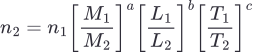
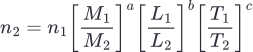
Converting units · Eq. (1.11)
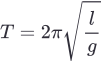
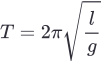
Period of a pendulum · Eq. (1.14)
Words to know
Points to Ponder
?
Do we choose units, or does nature give them to us?
We choose units; nature fixes dimensions. Metres or feet change the number, never the dimensions of a length.
?
Can a quantity have a unit but no dimensions?
Yes. An angle in radians is a pure number, yet we still write rad to show that it is an angle.
?
How many significant figures does “12 students” have?
As many as you like. Counted numbers, and defined ones like the 100 in 1 m = 100 cm, are exact.
?
Your calculator shows 7.94375. Should you write all of it?
No. A result is never more precise than the least precise measurement that went into it.
?
If an equation passes the dimension test, must it be right?
No. Dimensional analysis can prove an equation wrong, but it can never prove one right.